
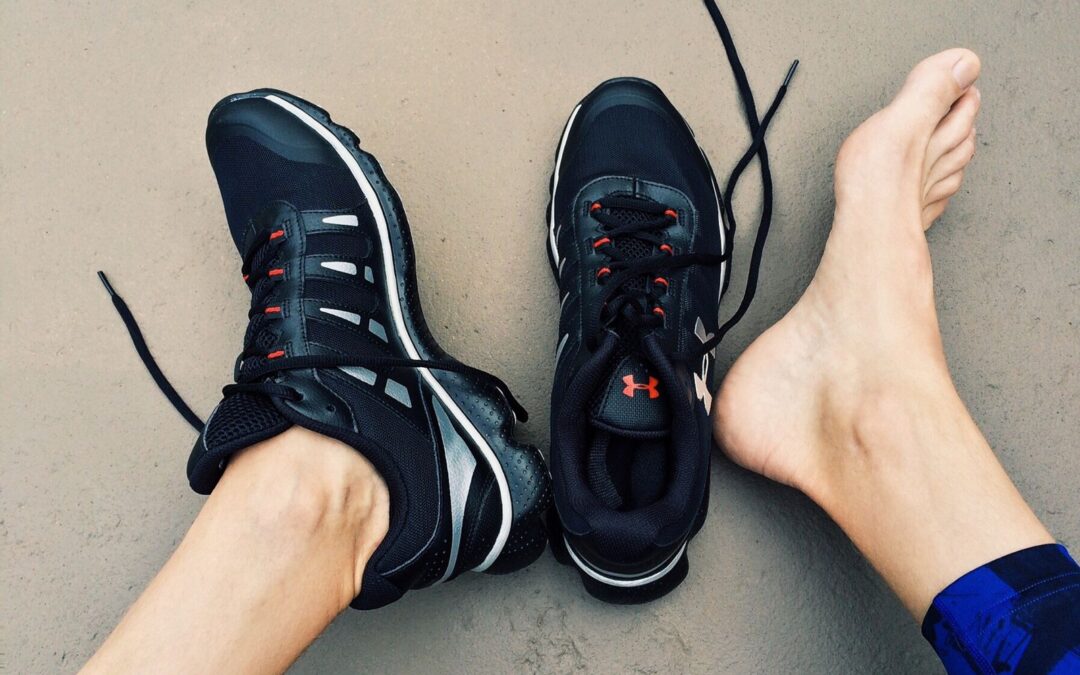
Shoes protect our feet from rough surfaces, changing weather conditions, and everyday hazards. Even more, every shoe affects how your foot moves. The shape of the toe box, stiffness of the sole, height of the heel, amount of cushioning, and overall fit can affect how your foot contacts the ground and how forces travel through your lower body. Over time, these effects may influence how your feet function, although the relationship between footwear and permanent changes in foot structure is more complicated than it may seem.
How Shoes Change the Way Your Feet Move
The human foot is designed to be both flexible and stable. When walking, it adapts to the ground as your body moves over it, then become more rigid as your toes and forefoot help propel your body forward. Shoes can modify this process by restricting the movement of your foot or providing additional support.
Research comparing barefoot walking with walking in conventional footwear has found differences in foot position, joint motion, ground-reaction forces, and muscle activity. Barefoot walking also allows your forefoot to spread more under load, while commonly worn shoes can limit that movement. These changes can occur immediately, even without any long-term adaptation to the footwear.
The shape of your shoe is particularly important. Your toes naturally spread when your foot bears weight, but many shoes taper toward the front, leaving less room than the foot’s natural shape requires. A narrow toe box can push your toes together and limit their ability to move independently. Since your toes contribute to balance and help your foot act as a lever during push-off, restricting them can change the normal foot mechanics.
Can Shoes Change Your Foot Structure?
One of the most obvious concerns about footwear is whether it can permanently alter the shape of your foot. For example, bunions are often associated with years of wearing tight or narrow shoes. A bunion, or hallux valgus, occurs when your big toe gradually shifts toward the other toes while the joint at its base becomes more prominent.
Footwear may contribute to the development of bunions, particularly when your shoes repeatedly compress the front of your foot. However, shoes are not the only factor. Genetics, bone structure, joint mobility, and other individual characteristics also influence a person’s risk. Research examining the relationship between footwear and the hallux valgus has found an association, but the evidence does not support the idea that shoes alone explain why some people develop bunions and others do not.
This distinction is important because the feet can vary considerably from one person to another. A shoe that feels comfortable and causes no problems for one individual may create pressure or discomfort for someone else with a wider forefoot or a different foot structure.
Cushioning, Flexibility, and Support
The sole of a shoe can also change how your foot functions. A very flexible sole allows your foot to move relatively freely, while a stiff sole limits movement through the joints of your foot. Neither characteristic is automatically better. A stiff sole can reduce painful movement and provide useful protection in certain situations, while a flexible shoe may allow for greater natural movement for someone with healthy feet.
Cushioning creates another trade-off. Soft materials can reduce the sensation of impact and redistribute pressure across the sole. This can make walking or running more comfortable, particularly on hard surfaces. At the same time, a cushioned shoe changes the sensory information reaching your foot.
The soles of your feet contain many sensory receptors that help your brain understand pressure, movement, and the body’s position relative to the ground. Walking barefoot provides a different type of sensory feedback from walking in a thick-soled shoe. Research has found measurable differences in walking patterns and foot loading when people walk barefoot versus wearing shoes, but these differences do not necessarily mean one option is healthier than the other.
The Right Shoe Depends on the Activity
There is no single shoe design that is ideal for everyone or every situation. For example, a sturdy boot may provide valuable protection and stability on uneven terrain even though it restricts your movement more than a flexible shoe.
The same principle applies to people with foot problems. Someone recovering from an injury may benefit from additional support or a stiffer sole, while another person without foot problems may prefer a shoe that allows for greater movement. Comfort and function are more useful guides than assuming that one particular category of footwear is universally better.
Giving Your Feet Room to Move
For most people, the practical lesson is fairly simple: Shoes should accommodate the shape of your feet rather than forcing them into an unnatural position. There should be enough room for your toes to sit comfortably, while your heel should feel secure without excessive pressure. The shoe should also be appropriate for the particular activity and comfortable enough so that wearing it does not create persistent pain or pressure.
Shoes change the way our feet interact with the ground. Those changes can be helpful, neutral, or occasionally problematic depending on the design and the person. Taking into consideration fit, comfort, and the demands of an activity can support healthy movement and give your feet the conditions they need to function well.